I dream of peaceful retirement such as this;
maybe you also have this dream:
"Living in retirement beyond the World,
Silently enjoying isolation,
...I pull the rope of my door tighter
And stuff my window with roots and ferns.
My spirit is tuned to the Spring-season:
At the fall of the year there is autumn in my heart.
Thus imitating cosmic changes
My cottage becomes a Universe.
By Lu Yiin [fourth century A. D.]
Sunday, February 20, 2011


dew of the flowers
"The dew of the flowers
dripping day by day;
In how many thousand years
will it have grown into a pool?
By Kiyowara Motosuke (907 – 990)
Included in "Kantan" Nō Play by Seami
Trans: Arthur Waley
dripping day by day;
In how many thousand years
will it have grown into a pool?
By Kiyowara Motosuke (907 – 990)
Included in "Kantan" Nō Play by Seami
Trans: Arthur Waley
Lost - by Zeami
"Lost on the journey of life,
shall I learn at last
that I trod but a path of dreams?"
...By Zeami (1363 – c. 1443)
Spoken by a traveling young man in search of his purpose in life; looking for answers, advice, wisdom
shall I learn at last
that I trod but a path of dreams?"
...By Zeami (1363 – c. 1443)
Spoken by a traveling young man in search of his purpose in life; looking for answers, advice, wisdom
Teardrops od Dew - Issa
He grieves for his recently deceased father--
"While I remain alive,
On me as on the grass
Fall teardrops of dew."
Ikinokoru
Ware ni kakaru ya
Kusa no tsuyu
Excerpt from Chichi no Shuen Nikki
Trans: Robert N. Huey
.
"While I remain alive,
On me as on the grass
Fall teardrops of dew."
Ikinokoru
Ware ni kakaru ya
Kusa no tsuyu
Excerpt from Chichi no Shuen Nikki
Trans: Robert N. Huey
.
A long line of wild geese - Buson
"A long line of wild geese
Against the lonely peak,
In the moonlight."
-Buson-
transl: Frances Rumsey
While reading this poem, I see myself forlorn and observing the scene; all is quiet.
A pretty unforgettable haiku, don't you agree?
Poem excerpted from "Japanese Impressions: with a note on Confucious"
Against the lonely peak,
In the moonlight."
-Buson-
transl: Frances Rumsey
While reading this poem, I see myself forlorn and observing the scene; all is quiet.
A pretty unforgettable haiku, don't you agree?
Poem excerpted from "Japanese Impressions: with a note on Confucious"
Saturday, February 19, 2011
Motionless Heron by Sōkan
Save for his thin voice
The motionless heron
Is but a drift of snow.
...Sōkan (1465 - 1554)
Japanese Impressions
The motionless heron
Is but a drift of snow.
...Sōkan (1465 - 1554)
Japanese Impressions
A Fallen Petal - by Arakida Moritake
A fallen petal
Rises to the branch:
Ah, a butterfly!
by Arakida Moritake
Passage excerpted from here
Rises to the branch:
Ah, a butterfly!
by Arakida Moritake
Passage excerpted from here
Dark Passage
Passage into dark
mountains over which the moon
presides so brilliantly....
Not seeing it i'd have missed
this passage into my own past.
by Poet-monk Saigyō Hōshi

mountains over which the moon
presides so brilliantly....
Not seeing it i'd have missed
this passage into my own past.
by Poet-monk Saigyō Hōshi

Mt Myojingatake in May - Notes to myself after hike.
Great mountain.
Great hike.
It was warm.
I was drenched in rain showers.
My cell phone battery was dead at the mountain's summit.
I was dry and muddy at end of hike.
Took the 2 plus hour train rides back looking like a vagabond but feeling great.
Somehow managed to get a sunburn (not too bad).
Hiked from Sengoku, over mountain, to Daiyuzan.
Please click on flower to see best picture.
This flower was beside the trail - I took the picture while the rain was still falling.

Great hike.
It was warm.
I was drenched in rain showers.
My cell phone battery was dead at the mountain's summit.
I was dry and muddy at end of hike.
Took the 2 plus hour train rides back looking like a vagabond but feeling great.
Somehow managed to get a sunburn (not too bad).
Hiked from Sengoku, over mountain, to Daiyuzan.
Please click on flower to see best picture.
This flower was beside the trail - I took the picture while the rain was still falling.
Trailside Mountain Flower

CHU CH'EN VILLAGE (A.D. 811)
Through this beautiful prose, Po Chu-i writes of simple villagers living an ideal, uncomplicated life.
Title: CHU CH'EN VILLAGE (A.D. 811)
Poet: Po Chu-i
More Translations From The Chinese
"In Hsii-chou, in the District of Ku-feng
There lies a village whose name is Chu-ch'en ―
A hundred miles away from the county-town,
Amid fields of hemp and green of mulberry-trees.
Click, click goes the sound of the spinning-wheel;
Mules and oxen pack the village-streets.
The girls go drawing the water from the brook;
The men go gathering fire-wood on the hill.
So far from the town Government affairs are few;
So deep in the hills, man's ways are simple.
Though they have wealth, they do not traffic with it;
Though they reach the age, they do not enter the Army.
Each family keeps to its village trade;
Grey-headed, they have never left the gates.
Alive, they are the people of Ch'en Village;
Dead, they become the dust of Ch'en Village.
Out in the fields old men and young
Gaze gladly, each in the other's face.
In the whole village there are only two clans;
Age after age Chus have married Ch'ens.
Near or distant, they have kinsmen in every house;
Young or old, they have friends
wherever they go.
On white wine and roasted fowl they fare
At joyful meetings more than " once a week."
While they are alive, they have no distant partings;
To choose a wife they go to a neighbour's house.
When they are dead,― no distant burial;
Round the village graves lie thick.
They are not troubled either about life or death;
They have no anguish either of body or soul.
And so it happens that they live to a ripe age
And great-great-grandsons are often seen."
Title: CHU CH'EN VILLAGE (A.D. 811)
Poet: Po Chu-i
More Translations From The Chinese
"In Hsii-chou, in the District of Ku-feng
There lies a village whose name is Chu-ch'en ―
A hundred miles away from the county-town,
Amid fields of hemp and green of mulberry-trees.
Click, click goes the sound of the spinning-wheel;
Mules and oxen pack the village-streets.
The girls go drawing the water from the brook;
The men go gathering fire-wood on the hill.
So far from the town Government affairs are few;
So deep in the hills, man's ways are simple.
Though they have wealth, they do not traffic with it;
Though they reach the age, they do not enter the Army.
Each family keeps to its village trade;
Grey-headed, they have never left the gates.
Alive, they are the people of Ch'en Village;
Dead, they become the dust of Ch'en Village.
Out in the fields old men and young
Gaze gladly, each in the other's face.
In the whole village there are only two clans;
Age after age Chus have married Ch'ens.
Near or distant, they have kinsmen in every house;
Young or old, they have friends
wherever they go.
On white wine and roasted fowl they fare
At joyful meetings more than " once a week."
While they are alive, they have no distant partings;
To choose a wife they go to a neighbour's house.
When they are dead,― no distant burial;
Round the village graves lie thick.
They are not troubled either about life or death;
They have no anguish either of body or soul.
And so it happens that they live to a ripe age
And great-great-grandsons are often seen."
Saturday, January 29, 2011
Quiet Despair
In my solitude,
I sadly wonder what to do,
But the only reply
Is the rustling
Of the reeds before me.
Hitori shite
Ika ni semashi to
Wabitsureba
Soyo tomo mae no
Ogi no kotauru.
Excerpt from: Kon- jaku Monogatari.
It is also the basis for the noh play Ashikari.
Part of Yamato Monogatari.
I sadly wonder what to do,
But the only reply
Is the rustling
Of the reeds before me.
Hitori shite
Ika ni semashi to
Wabitsureba
Soyo tomo mae no
Ogi no kotauru.
Excerpt from: Kon- jaku Monogatari.
It is also the basis for the noh play Ashikari.
Part of Yamato Monogatari.
Wednesday, January 5, 2011
THE LETTER by Po Chu-i [A.D. 81 ]
Another gem from Po; he has such a great sense of humor and rhythm. Po wrote THE LETTER soon after becoming separated from his exhiled best friend.
THE LETTER
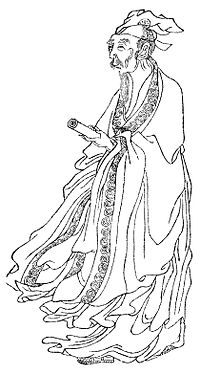
by Po Chu-i [A.D. 81 ]
"A knocking on the door sounded 'Doong, doong!'
They came and told me a messenger from Shang-chou
had brought a letter, a single scroll from you!
Up from my pillow I suddenly sprang out of bed
and threw on my clothes, all topsy-turvy.
I undid the knot and saw the letter within;
a single sheet with thirteen lines of writing.
At the top it told the sorrows of an exile's heart;
at the bottom it described the pains of separation.
The sorrows and pains took up so much space
There was no room left to talk about the weather! "
I excerpted this passage from "The Letter".
Reference: Waley, A. D., & Chu-I, P. (January 01, 1917). Thirty-Eight Poems by Po Chu-I. Bulletin of the School of Oriental Studies, London Institution, 1, 1, 53-78.
Po link: http://en.wikipedia.org/wiki/Po_Chu-i
Saturday, December 11, 2010
The Great Summons
THE GREAT SUMMONS
---Chu Yuan (褚淵) (435-482)
"When Chu Yuan had been exiled from the Court for nine years, he became so despondent that he feared his soul would part from his body and he would die. It was then that he made the poem called " The Great Summons," calling upon his soul not to leave him:
"In those dark caves where Winter lurketh
Hide not, my Soul! 0 Soul come back again! 0, do not stray!
0 Soul come back again and go not east or west, or north
or south!
For to the East a mighty water drowneth Earth's other shore;
Tossed on its waves and heaving with its tides
The hornless Dragon of the Ocean rideth: Clouds gather low and fogs enfold the sea
And gleaming ice drifts past.
0 Soul go not to the East,
To the silent Valley of Sunrise!
0 Soul go not to the South
Where mile on mile the earth is burnt away
And poisonous serpents slither through the flames;
Where on precipitous paths or in deep woods
Tigers and leopards prowl,
And water-scorpions wait;
Where the king-python rears his giant head.
0 Soul, go not to the South
Where the three-footed tortoise spits disease!
0 Soul go not to the West
Where level wastes of sand stretch on and on;
And demons rage, swine-headed, hairy-skinned,
With bulging eyes;
Who in wild laughter gnash projecting fangs.
0 Soul go not to the West
Where many perils wait!
0 Soul go not to the North,
To the Lame Dragon's frozen peaks;
Where trees and grasses dare not grow;
Where a river runs too wide to cross
And too deep to plumb,
And the sky is white with snow
And the cold cuts and kills.
0 Soul seek not to fill
The treacherous voids of the north!
0 Soul come back to idleness and peace.
In quietude enjoy
The lands of Ching and Ch'u.
There work your will and follow your desire
Till sorrow is forgot,
And carelessness shall bring you length of days.
0 Soul come back to joys beyond all telling!
Where thirty cubits high at harvest-time
The corn is stacked;
Where pies are cooked of millet and bearded-maize.
Guests watch the steaming bowls
And sniff the pungency of peppered herbs.
The cunning cook adds slices of bird-flesh,
Pigeon and yellow-heron and black-crane.
They taste the badger-stew.
0 Soul come back to where the good are praised!
Like the sun shining over the four seas
Shall be the reputation of our King;
His deeds, matched only in Heaven, shall repair
The wrongs endured by every tribe of men,—
Northward to Yu and southward to Annam,
To the Sheep's Gut Mountain and the Eastern Seas.
0 Soul come back to where the wise are sought!
Behold the glorious virtues of our King
Triumphant, terrible;
Behold with solemn faces in the Hall
The Three Grand Ministers walk up and down,—
None chosen for the post save landed-lords
0 Soul come back to where men honour still
The name of the Three Kings."
Note: I have abridged this prose poem for my own satisfaction: the complete version can be viewed/ downloaded at:
More Translations From The Chinese
---Chu Yuan (褚淵) (435-482)
"When Chu Yuan had been exiled from the Court for nine years, he became so despondent that he feared his soul would part from his body and he would die. It was then that he made the poem called " The Great Summons," calling upon his soul not to leave him:
"In those dark caves where Winter lurketh
Hide not, my Soul! 0 Soul come back again! 0, do not stray!
0 Soul come back again and go not east or west, or north
or south!
For to the East a mighty water drowneth Earth's other shore;
Tossed on its waves and heaving with its tides
The hornless Dragon of the Ocean rideth: Clouds gather low and fogs enfold the sea
And gleaming ice drifts past.
0 Soul go not to the East,
To the silent Valley of Sunrise!
0 Soul go not to the South
Where mile on mile the earth is burnt away
And poisonous serpents slither through the flames;
Where on precipitous paths or in deep woods
Tigers and leopards prowl,
And water-scorpions wait;
Where the king-python rears his giant head.
0 Soul, go not to the South
Where the three-footed tortoise spits disease!
0 Soul go not to the West
Where level wastes of sand stretch on and on;
And demons rage, swine-headed, hairy-skinned,
With bulging eyes;
Who in wild laughter gnash projecting fangs.
0 Soul go not to the West
Where many perils wait!
0 Soul go not to the North,
To the Lame Dragon's frozen peaks;
Where trees and grasses dare not grow;
Where a river runs too wide to cross
And too deep to plumb,
And the sky is white with snow
And the cold cuts and kills.
0 Soul seek not to fill
The treacherous voids of the north!
0 Soul come back to idleness and peace.
In quietude enjoy
The lands of Ching and Ch'u.
There work your will and follow your desire
Till sorrow is forgot,
And carelessness shall bring you length of days.
0 Soul come back to joys beyond all telling!
Where thirty cubits high at harvest-time
The corn is stacked;
Where pies are cooked of millet and bearded-maize.
Guests watch the steaming bowls
And sniff the pungency of peppered herbs.
The cunning cook adds slices of bird-flesh,
Pigeon and yellow-heron and black-crane.
They taste the badger-stew.
0 Soul come back to where the good are praised!
Like the sun shining over the four seas
Shall be the reputation of our King;
His deeds, matched only in Heaven, shall repair
The wrongs endured by every tribe of men,—
Northward to Yu and southward to Annam,
To the Sheep's Gut Mountain and the Eastern Seas.
0 Soul come back to where the wise are sought!
Behold the glorious virtues of our King
Triumphant, terrible;
Behold with solemn faces in the Hall
The Three Grand Ministers walk up and down,—
None chosen for the post save landed-lords
0 Soul come back to where men honour still
The name of the Three Kings."
Note: I have abridged this prose poem for my own satisfaction: the complete version can be viewed/ downloaded at:
More Translations From The Chinese
Subscribe to:
Posts (Atom)